
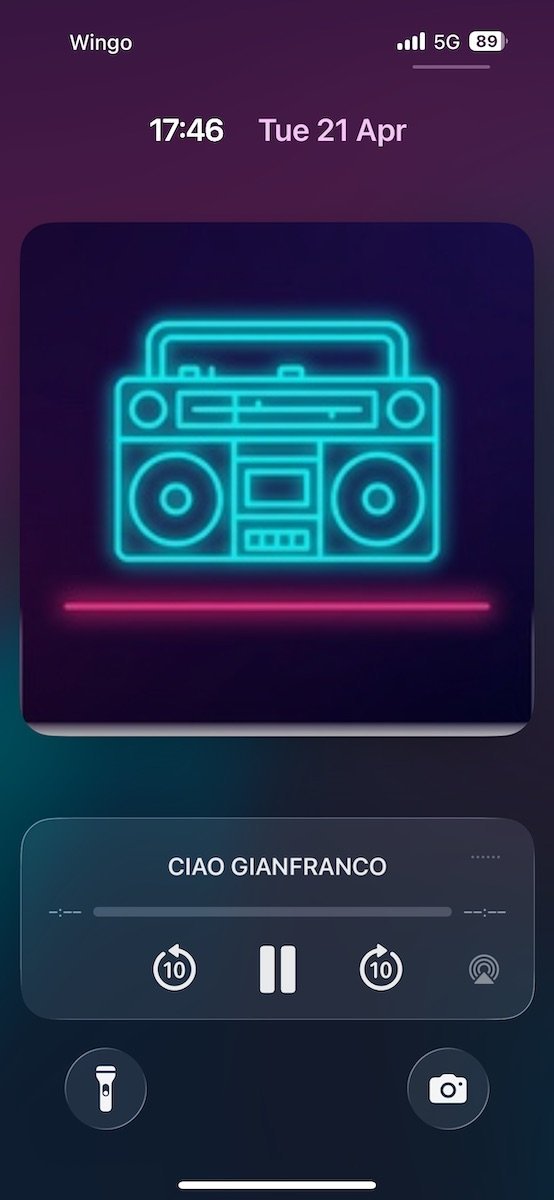
My 2009 Hyundai has never tried to impress anyone. It starts when I turn the key, it gets me where I need to go, and for years that was more than enough. But somewhere along the way, the world around it changed. Not abruptly, but gradually, almost imperceptibly—until one day it felt like the car hadn’t just aged, it had been left behind.
In Switzerland, several national stations have begun switching off their FM frequencies. What used to be a simple, reliable companion on every drive suddenly became limited, almost obsolete. Meanwhile, everything else in my daily life had moved in the opposite direction—toward instant access, streaming, personalization. I was holding a smartphone capable of doing almost anything, yet the experience inside my car felt like stepping back in time.
Upgrading the car would have been the obvious solution. But it also felt unnecessary. The car itself still worked perfectly. What didn’t work anymore was the interface between me and the modern world.
So instead of replacing the car, I decided to reinterpret it.
Building a Dashboard Instead of Buying One
The idea was surprisingly simple: if the car couldn’t adapt, my phone could. And rather than relying on existing apps or complex systems, I wanted something entirely my own—a small, focused interface designed specifically for how I drive.
I ended up building a lightweight, mobile-friendly web page that acts as a personal dashboard. No frameworks, no heavy dependencies, nothing that would slow it down. Just a fast-loading page that opens instantly and does exactly what I need, nothing more.
What I didn’t expect was how much personality would find its way into it.
A Design That Doesn’t Take Itself Too Seriously
Instead of mimicking modern, minimalist design trends, I went in the opposite direction. The interface leans unapologetically into a 90s-inspired aesthetic—bright neon colors, bold gradients, oversized buttons that feel almost tactile. It’s closer to an old arcade machine than a contemporary app.
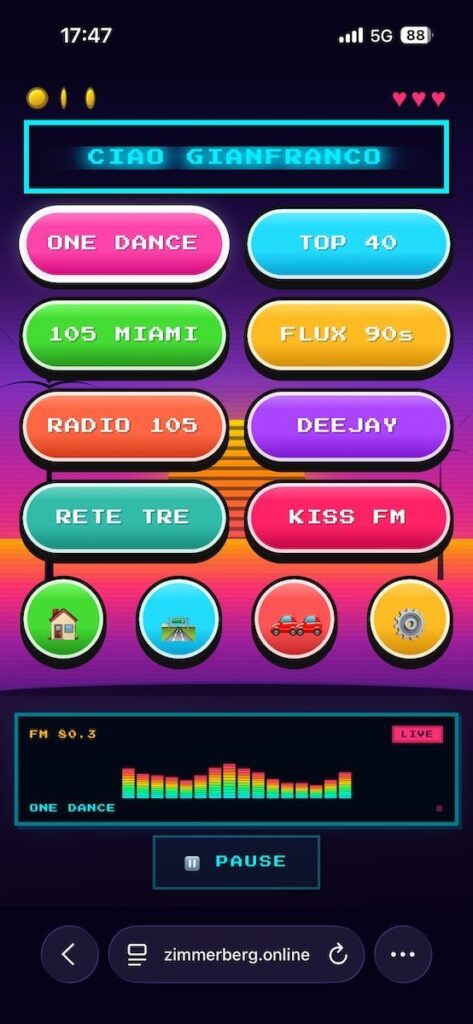
When you’re driving, elegance matters less than clarity. Large buttons, strong contrasts, immediate feedback—these things aren’t just stylistic choices, they’re functional ones. The result is something playful, slightly nostalgic, but also incredibly practical.
Music, Simplified to a Single Tap
At the center of the whole system is music. Or more precisely, access to it.
I started by integrating a handful of my favorite radio stations—about eight in total—each mapped to a single button. One tap, and the stream starts instantly. No searching, no scrolling, no distractions.
Finding the actual streaming URLs took a bit of digging. Broadcasters don’t always make them easy to discover, but they’re usually there if you know where to look. Once I had them, everything else fell into place.
What began as a workaround for disappearing FM radio quickly became something much more direct—and, in many ways, better than what I had before.
From Radio Player to Driving Companion
Naturally, once the foundation was there, it was hard to stop.
I began adding small features that removed friction from everyday driving. A button to take me home that opens navigation instantly, already pre-filled. Another for quick access to maps without typing anything. And then a more personal addition: a shortcut to a live traffic feed for the Gotthard tunnel.
Anyone who regularly drives south toward Italy knows how unpredictable that stretch can be. Over time, I found that the most reliable updates came from a specific social feed, so I integrated it directly. One tap, and I have real-time information without needing to search for it while driving.
It was at that point I realized I wasn’t just building a radio interface anymore—I was building a small, highly personalized driving assistant.
Expanding Beyond Borders
The next step came almost by accident. While exploring ways to extend the system, I came across an open-source project built around the Radio Browser API, hosted on GitLab. It offers access to a vast directory of internet radio stations from around the world.
Integrating it meant adding a second layer to my dashboard—a place where I could search and explore stations far beyond my usual rotation. Suddenly, the limitations of FM radio weren’t just solved; they were irrelevant.
My 2009 car now had access to a global soundscape.
The Invisible Layer: Automation
What truly makes the system feel seamless, however, isn’t the interface itself—it’s what happens behind the scenes.
The hardware setup is minimal: a small Bluetooth receiver powered via USB and connected through the AUX input. When I start the engine, the device turns on, and my phone connects automatically.
From there, an iOS automation takes over. The moment the phone connects to that specific Bluetooth device, it triggers a shortcut that opens my dashboard instantly.
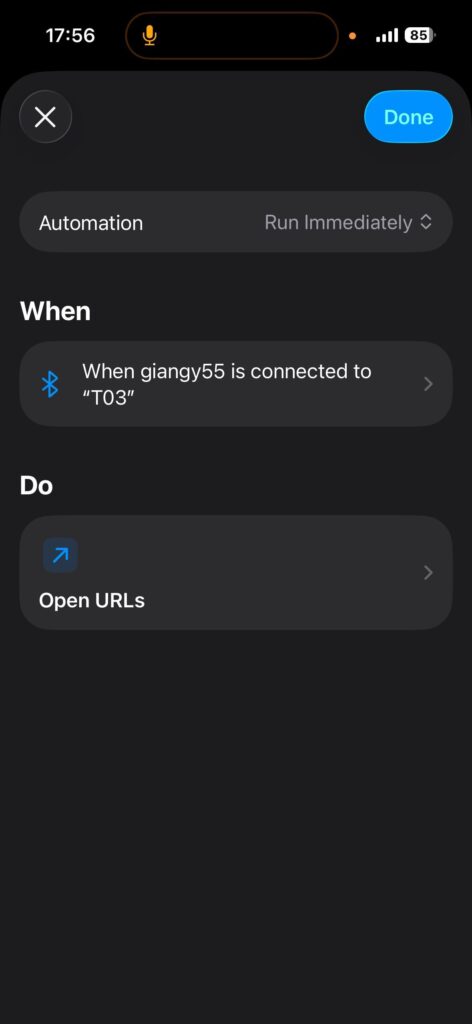
There’s no conscious interaction required. By the time I’m ready to drive, everything is already in place.
It feels less like using an app and more like the car itself has quietly learned a new behavior.
The Reality of Tinkering
Of course, none of this came together in a single pass. The process was iterative—sometimes obsessively so.
Layouts were adjusted, then adjusted again. Buttons resized, colors reworked, interactions simplified. It’s surprisingly easy to spend hours refining details that most people would never notice, chasing that subtle feeling of “this works exactly right.”
And occasionally, you run into the limits of what’s possible.
One small annoyance, for example, is that every time the automation runs, it opens a new browser tab. Over time, that leaves a trail of identical pages in my history. There are ways to solve it, or at least mitigate it, but I haven’t gone down that path yet.
Not because I can’t—but because I’ve learned something important about projects like this.
They’re never really finished.
A Small Project That Changed the Experience
What started as a simple workaround for disappearing radio turned into something much more meaningful. Not because it’s technically impressive, but because it reshaped the way I interact with something I use every day.
The car itself hasn’t changed. It’s still the same 2009 Hyundai.
But the experience of driving it has.
And that, in the end, is what matters.
There’s a tendency to think that progress always means replacing the old with the new. But sometimes, it’s enough to look at what you already have from a different angle—to extend it, reinterpret it, and make it your own.
In doing so, you don’t just modernize the object.
You personalize it.